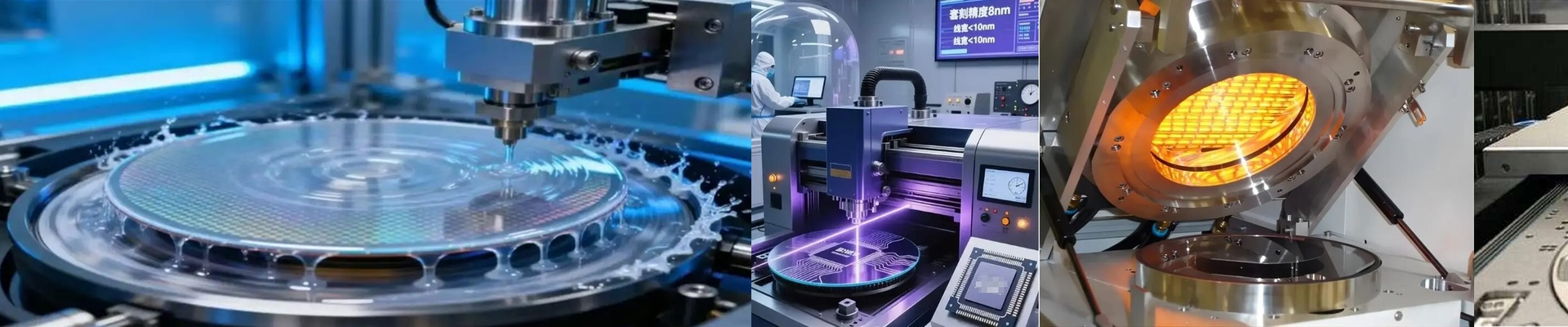


Out on the fab floor, a soft bake that drifts even half a degree can throw off critical dimensions and scrap an entire lot. We built our SCR power regulator for the lamp to stop that drift at the source, so the lamp output tracks the recipe—not the line voltage. What matters, technically It’s a closed-loop SCR controller paired with a lamp driver matched to halogen, quartz, short-wave, medium-wave, and carbon-fiber NIR sources. You get wafer-level thermal uniformity of ±0.1°C across the bake plate, and shift-to-shift repeatability stays within ±0.2°C. Output holds to 0.1% of setpoint, with sub-10 ms response to setpoint changes and line sag. The unit is built for Class 1–100 cleanroom use—zero particle generation from the thermal stack, and an EMI-aware layout so it doesn’t step on lithography. Photoresist processing—soft bake, hard bake, and post-exposure bake—lives and dies on thermal budget. With the SCR regulator keeping lamp energy steady, you hit target CD and profile every run. The payoff is fewer reworks, higher first-pass yield, and thermal profiles you can count on across wafers and lots. You also save energy because the lamp isn’t being overdriven to chase fluctuations, and lamp life stretches out under stable drive conditions. Here are the practical details you need. The driver has to be matched to the lamp resistance curve at cold start; mismatched lamps can spike inrush current and trip protection. Installation calls for a dedicated, low-noise control line routed away from high-current traces, and the thermal interface has to be clean and flat to keep that uniformity spec. Expect a short commissioning run to tune the PID for your specific lamp-and-plate thermal mass.