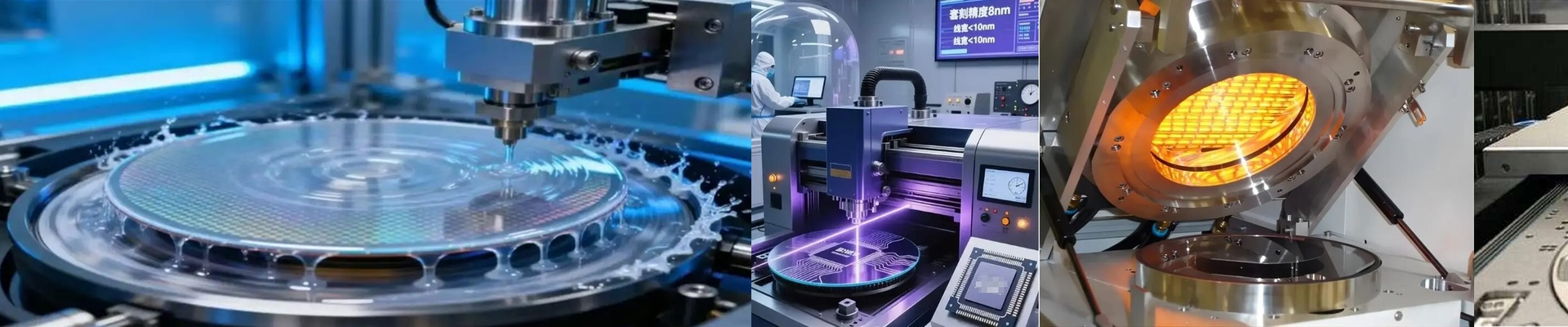

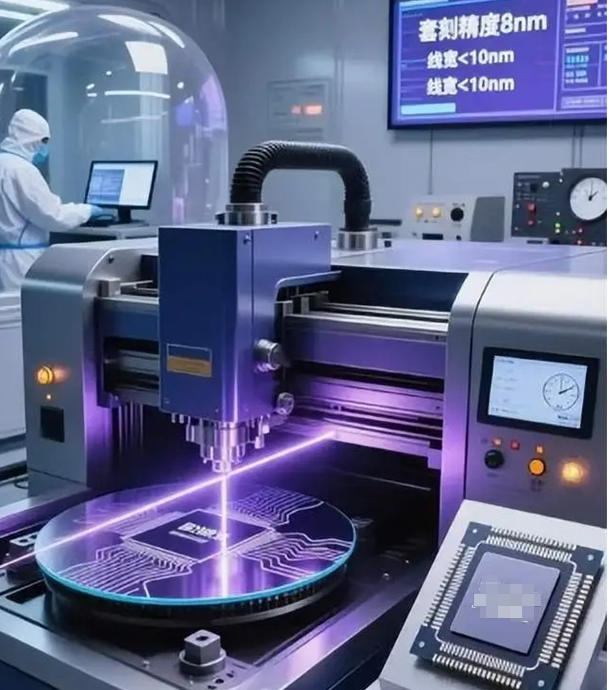
On the lithography floor, the clock starts the second the wafer hits temperature. Soft bake and hard bake aren’t just “heating steps.” They’re dimensional control steps. A 2°C drift will move a CD, and a few seconds of overshoot will eat up good silicon. When the thermal system can’t keep up with the recipe, the line pays for it—scrap, rework, and unplanned downtime. We built a fast-response infrared heater bulb for semiconductor tools because, in this business, thermal behavior is process behavior. Being hot isn’t enough. It has to be on-target, stable, and repeatable—cycle after cycle.
What matters under the hood
At the core is a short-wave infrared (NIR) halogen emitter in a quartz envelope, engineered for snap response and tight control. The wavelength is tuned so photoresist and common wafer substrates absorb it hard—heat goes into the film and the wafer, not into the tool structure. The specs translate straight into process control:
- **Response time:**Hits setpoint in seconds, so you can run short bake profiles and swap recipes without waiting on long stabilization.
- **Thermal uniformity:**Keeps wafer-level uniformity within ±0.1°C across the active bake zone, cutting local CD bias and edge defects.
- **Temperature repeatability:**Holds setpoint with minimal drift, so critical dimensions stay consistent lot to lot.
- **Cleanroom compatibility:**Built for Class 1–100 environments, with materials and finishes that keep outgassing and particles down.
- **Zero particle generation:**Emitter geometry and mounting avoid hot spots and flaking, so particle counts stay low even during continuous operation.
- **24/7 reliability:**Designed for long life and stable output, so you can run high-volume schedules with fewer planned replacements. This isn’t a general-purpose heater. It’s a process-critical thermal source, specified the way semiconductor engineers specify—by stability, uniformity, and uptime.
Why this works in a real fab
In semiconductor manufacturing, thermal steps and yield are locked together. Soft bake removes solvents and sets viscosity; hard bake cures the resist and gets it ready for etch or implant. When those steps wobble, you see it later as line-width variation, scumming, poor adhesion, or residual defects. A fast-response infrared heater bulb improves three things at once. **It stabilizes the thermal budget, and that improves yield.**With ±0.1°C uniformity, the center and edge of the wafer get the same thermal dose, so the resist profile repeats across the lot—and across the week. You get fewer temperature-related excursions, and the control charts stay in control. **It also improves equipment stability.**The bulb is built for continuous duty, and its stable output cuts the frequency of recalibration. In practice, that means fewer stops for thermal drift, fewer alarms, and more predictable preventive maintenance windows. Reliability shows up as uptime, and uptime shows up as wafers out the door. **And it improves throughput without giving up repeatability.**Fast response enables shorter bake times and quicker recipe transitions, freeing up station cycle time. Because the system snaps back to setpoint fast, the first wafer after a change meets the same spec as the tenth. That kind of predictability is what keeps the line balanced. Energy use stays disciplined, too. The emitter turns electrical input into radiant heat efficiently, and since it heats the target directly, less energy is wasted heating the chamber. The result is lower operating cost per wafer—without shrinking the process window.
The practical details you’ll run into
A fast-response infrared heater bulb is only as good as the system it sits in. **Match the driver to the emitter.**The power supply and control need to be compatible with the lamp’s voltage, current, and inrush behavior. An undersized driver will hold the bulb back; an oversized driver can shorten life. We provide matching driver recommendations and wiring guidance so the thermal loop stays stable. **Respect the thermal-mechanical interface.**The bulb has to mount securely, but overtightening the holder stresses the quartz and can create micro-cracks. Use the specified torque and alignment, and verify interface temperature during qualification. **Plan replacements on purpose, not in a panic.**Even with stable output, the emitter has a finite life. Build a predictable replacement interval into your PM schedule. That preserves temperature repeatability and keeps last-minute line stops off the calendar. If your tool runs in a Class 1–100 cleanroom, confirm the cleanroom-compatible construction—sealed feedthroughs, low-outgassing materials, and a mounting approach that doesn’t create particle traps. The goal is a heater that acts like part of the tool, not another source of variability. When thermal performance is process performance, the heater bulb has to be treated as a process component. A fast-response infrared heater that holds ±0.1°C uniformity, generates zero particles, and runs reliably is how you keep photoresist bake in spec, keep the line moving, and keep yield where it needs to be.