



Getting Your Fab’s Heat Under Control with IR
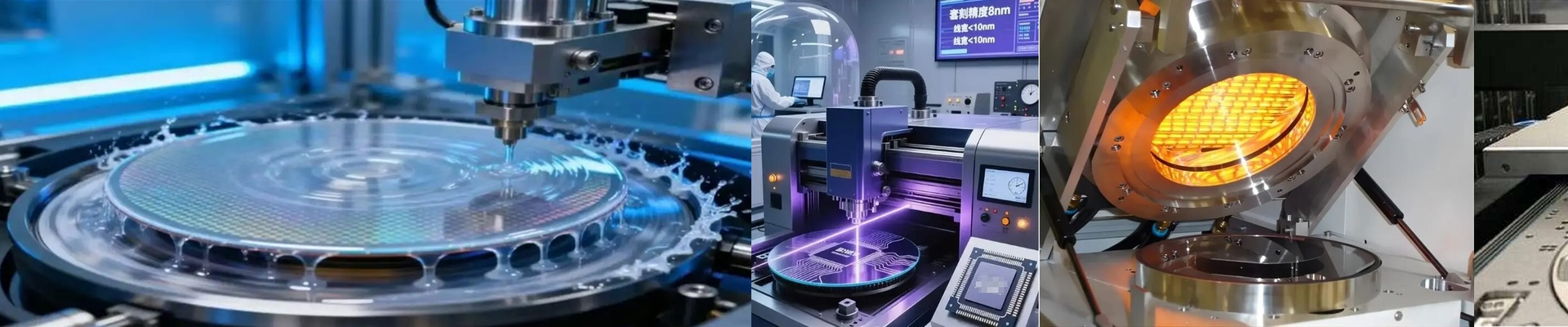
Let’s be honest: old-school heating methods just don’t cut it anymore. If you’re running a modern semiconductor or electronics Fab, you can’t rely on guesswork. You need data. That’s why we lean on infrared (IR) systems. Instead of trying to heat up all the air in your cleanroom—which is a nightmare for your HVAC and a great way to kick up dust and particles—IR goes straight to the source. It’s direct radiant heat. Simple. Making it “Smart” If you’re moving toward a digitized line, you need your heat to keep up. We build our IR systems to talk directly to your PLC controllers using modulated power supplies. What does that actually mean for you? It means you can tweak your thermal output in real-time based on what your sensors are telling you. You can ramp temperatures up or down in seconds. Not minutes. Seconds. That speed alone kills a huge chunk of your cycle time. The Trade-off (The Part Everyone Forgets) Here is the catch. To get the kind of heat flux you need for wafer processing or curing, you have to use high-wattage emitters. They pack a punch, but they also create a lot of concentrated heat. You’ve got to make sure your chassis and cooling manifolds are actually built to handle that rise in ambient temperature. If your cooling is too small, your temperatures will drift. And once you drift out of that thermal window, you’re looking at a lot of wasted material. Why This Works for Cleanrooms Convection heaters move air. In a cleanroom, moving air is basically a risk you can’t afford. IR keeps everything still. We use quartz and ceramic emitters because they don’t outgas or shed particles. It’s just clean. Plus, you can plug these systems right into your SCADA network. Suddenly, your heating stage isn’t some “black box” that you just hope is working. It’s a data point. If a batch fails, you don’t have to scratch your head and wonder why. You just pull up the thermal logs, find exactly where the temperature dipped, and fix it. It’s that easy.