


Cutting Cycle Times: Why IR Beats Hot Air in a Vacuum
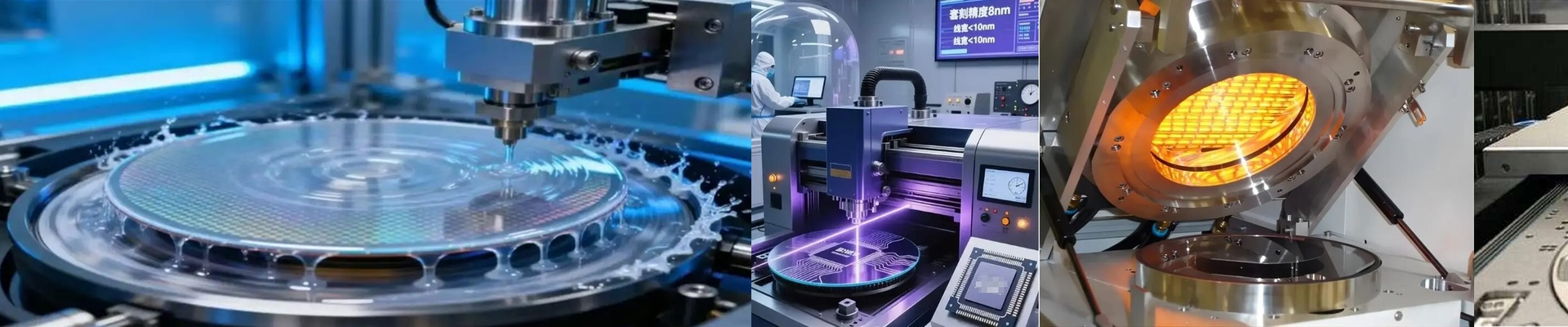
If you’re working in semiconductor deep processing, you know the biggest headache is “time cost.” Most people start with hot air circulation. It works, but it’s slow. You’re basically heating up air, and then hoping that air heats up your wafer. But here’s the problem: once you move into a vacuum, you don’t have any air. You’ve lost your middleman. That’s where vacuum-compatible infrared (IR) heaters come in. Instead of relying on a medium, IR just beams energy directly onto the substrate. It’s a straight shot.
Stop waiting for the oven to warm up
Hot air systems have a lot of “thermal inertia.” That’s just a fancy way of saying they’re sluggish. You have to heat the chamber walls and the entire volume of air before the workpiece even starts to get warm. It’s a massive bottleneck. IR lamps are different. They hit the target temperature in seconds. Because the heat transfer is direct, you don’t have to deal with those annoying ramp-up and cool-down lags. You’re moving your process from minutes down to seconds.**It’s fast. Really fast.**And that changes everything for your workflow.
The dirty side of vacuum integrity
Now, you can’t just throw any heater in there. Standard heaters tend to “outgas.” In a high-vacuum environment, any little bit of lubricant or organic compound on the heater can drift over and contaminate your wafer. That’s a nightmare you don’t want. To stop that, we use quartz envelopes and specific vacuum-rated brazing for the electrodes. It keeps the leaks and the gunk out. One thing to keep in mind: power density. High-wattage IR lamps pack a lot of heat into a tiny space. If your chamber’s cooling jacket isn’t up to the task, the radiative heat that misses the wafer will start warping your seals.Check your specsbefore you flip the switch.
Getting more wafers through the door
The real win here is the control. With IR, you can trigger a quick pulse of heat, do your process, and quench the part immediately. You don’t have to sit around waiting for a giant oven to cool down. For the engineers on the floor, this means way more wafers per hour. You’re basically getting rid of that boring “soak time” you get with convection. You swap out a simple air blower for a precise power controller and a vacuum-sealed lamp, and suddenly, your throughput jumps.